
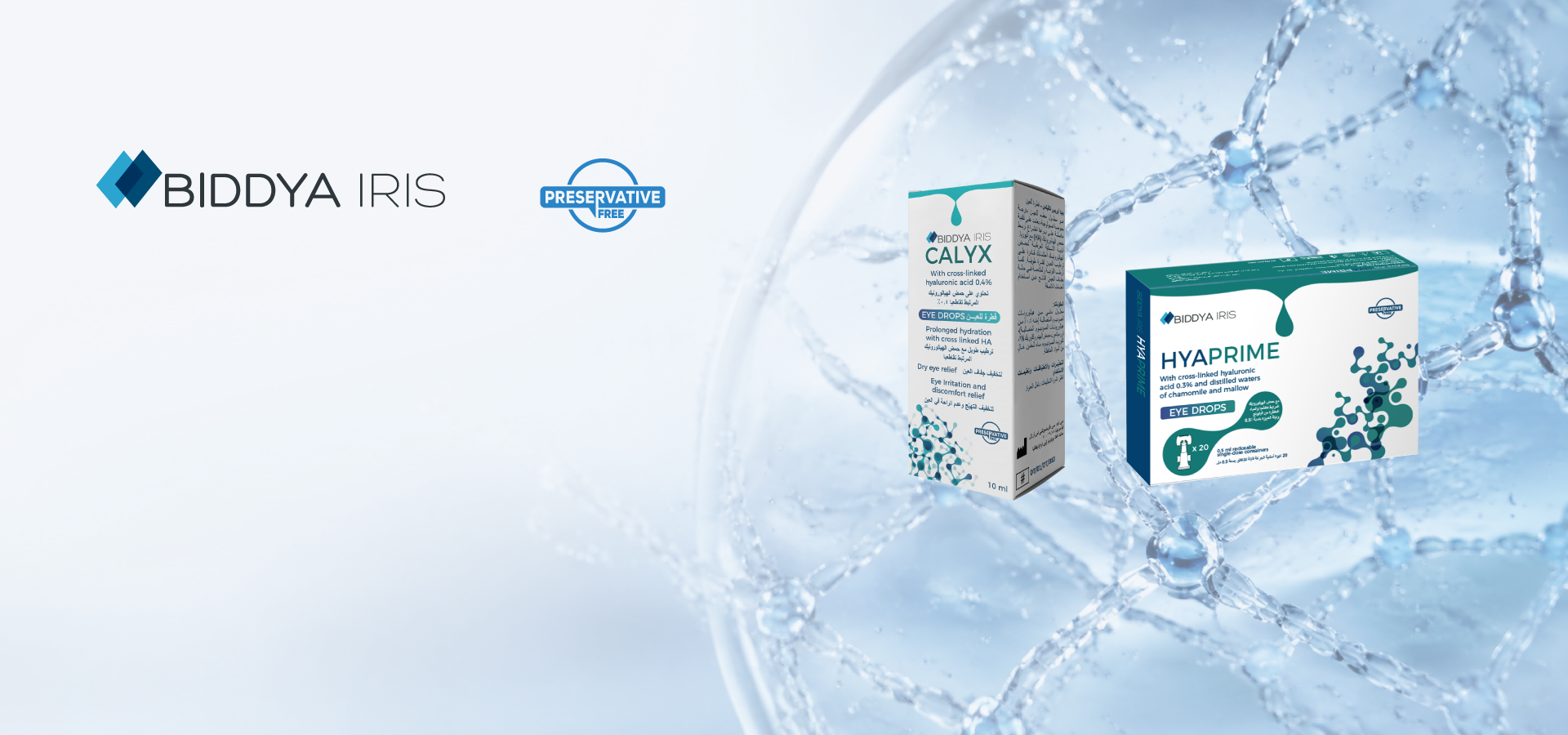
Crosslinked HA
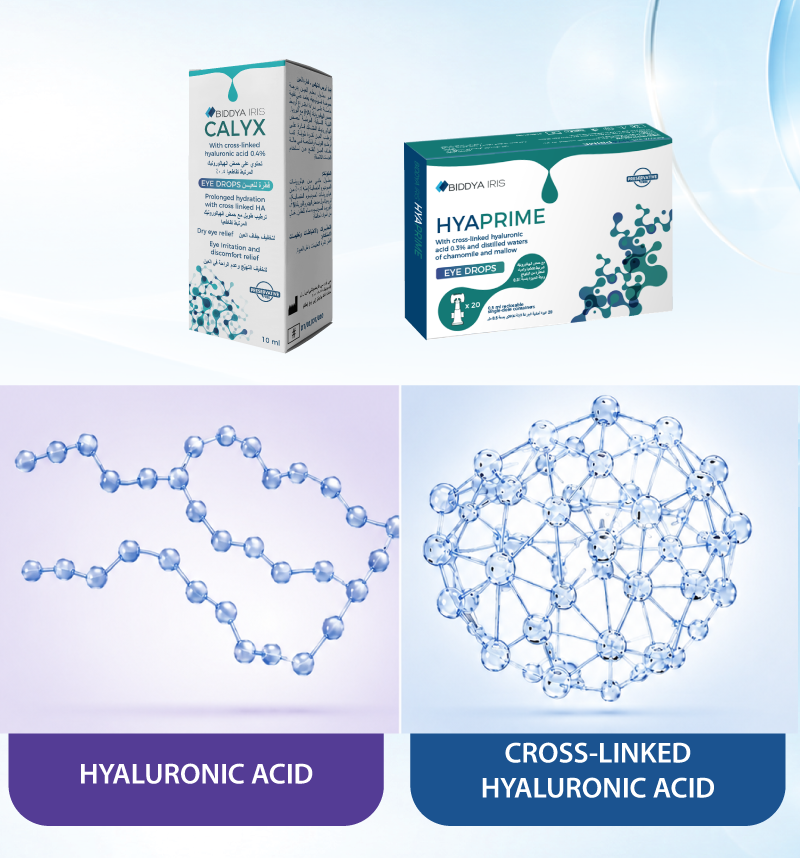
Cross-linked HA
In ophthalmology, linear (non-crosslinked) hyaluronic acid (HA) and crosslinked hyaluronic acid differ significantly in their structure, behavior, and clinical applications.
|
Feature |
Linear (Non-crosslinked) HA |
Crosslinked HA |
|
Structure |
Natural HA chains not chemically bonded ( Picture) |
HA chains chemically linked together(Picture) |
|
Viscosity |
Lower to moderate |
Higher |
|
Patient Compliance |
Frequent installation |
Convenient, less frequency |
|
Biodegradation |
Rapidly degraded by hyaluronidase |
More resistant to enzymatic degradation |
|
Water retention |
Good |
Excellent and more sustained |
|
Epithelial Regeneration |
Slightly effect |
Regenerative properties |
|
OSDI |
Less reduction compared to CL HA |
Excellent reduction |
Structure :
Ophthalmic Uses
Crosslinked Hyaluronic Acid
Crosslinking creates a three-dimensional network that remains on the ocular surface much longer.
Applications:
- Severe dry eye disease
- Persistent epithelial defects
- Neurotrophic keratitis
- Ocular surface reconstruction
- Experimental regenerative therapies
- Long-lasting ocular lubricants
Advantages:
- Longer retention time
- Greater resistance to tear washout
- Longer dosing intervals
- Better hydration of the ocular surface
- May improve epithelial wound healing
Mechanism of Action
Crosslinked HA
- Forms a more stable hydrogel on the ocular surface.
- Releases water gradually.
- Provides prolonged lubrication.
- May serve as a scaffold for epithelial cell migration during wound healing.