

Eye Conditions
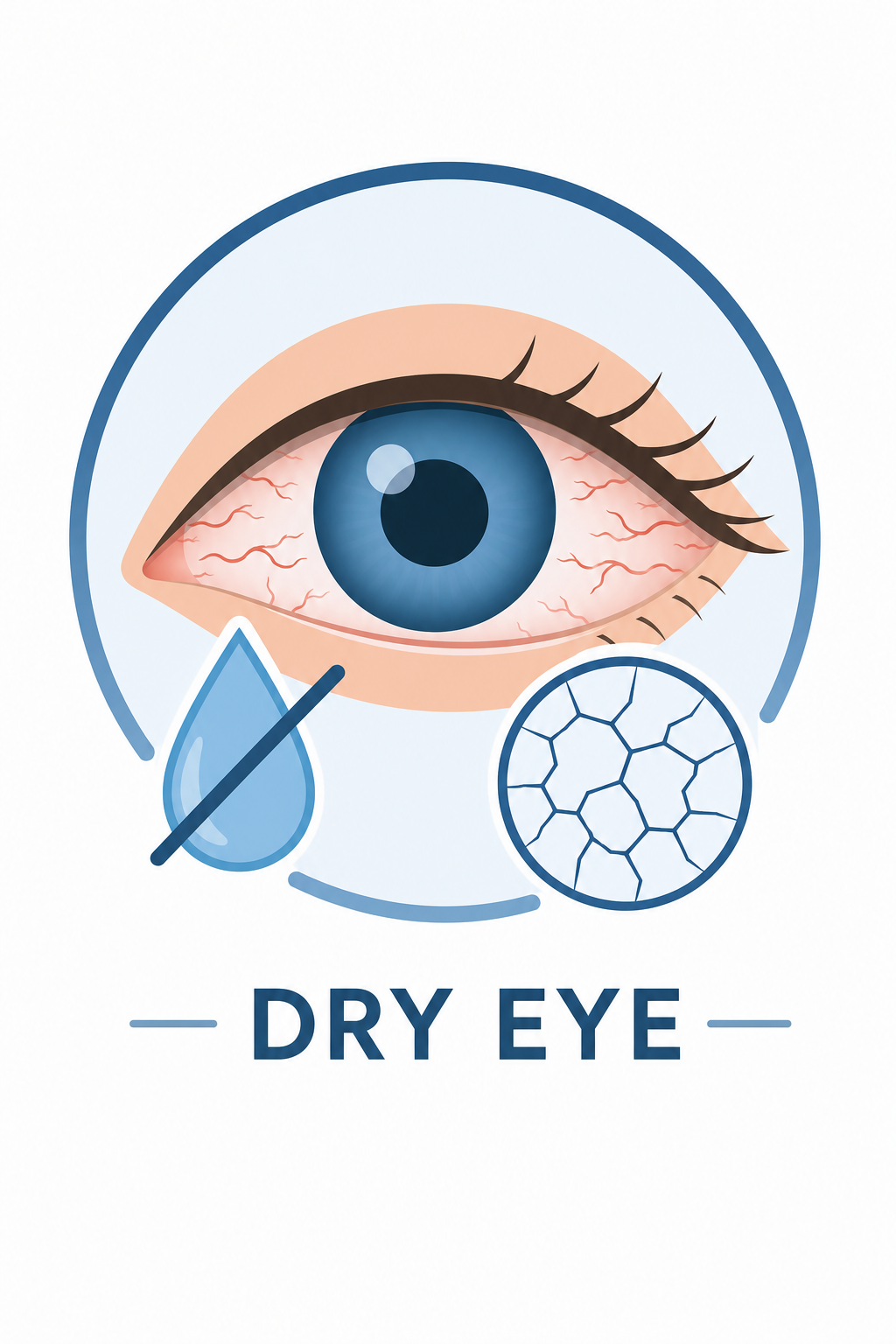
Dry Eye
Dry eye, also known as dry eye disease (DED) or keratoconjunctivitis sicca, is a chronic condition caused by inadequate tear production or rapid tear evaporation. It results in a disrupted tear film, leaving the surface of the eye unlubricated and causing irritation, inflammation, and visual disturbances.
Key Characteristics & Mechanisms
According to the Tear Film and Ocular Surface Society (TFOS), dry eye is a multifactorial disease defined by:
- Loss of Homeostasis: The delicate balance of the tear film fails, leading to unstable tears.
- Hyperosmolarity: The tears become too concentrated, which damages the cells on the surface of the eye.
- Inflammation: The lack of proper lubrication causes the ocular surface and surrounding glands to become inflamed.
Primary Causes
The condition typically stems from one of two main issues, or a combination of both:
- Decreased Tear Production: The lacrimal glands fail to produce enough aqueous (watery) fluid to keep the eye properly moistened.
- Increased Tear Evaporation: The eye produces an adequate volume of tears, but the tears evaporate too quickly. This is often due to Meibomian Gland Dysfunction (MGD), where the glands that produce the crucial oily outer layer of the tear film become blocked or fail to function.
Common Symptoms
The lack of a healthy, stable tear film leads to several uncomfortable symptoms, including:
- A stinging, burning, or scratchy feeling
- Redness and pain in the eye
- Episodes of excess, reflex tearing (as the eye attempts to flush out the irritation)
- Blurred or fluctuating vision, particularly during reading or screen use
- Discomfort when wearing contact lenses
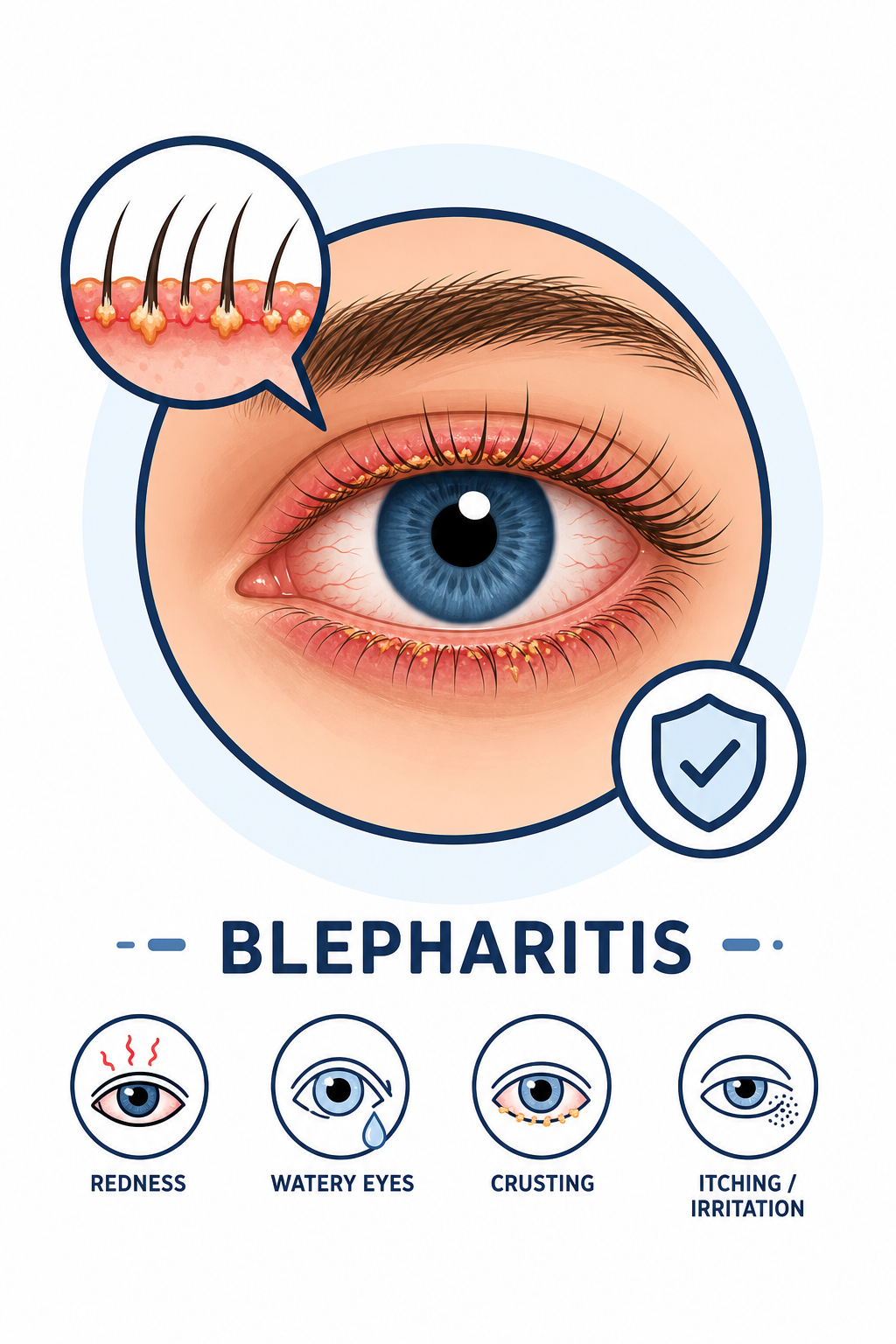
Blepharitis
Blepharitis is a common, long-term condition that causes inflammation, redness, and irritation along the edges of the eyelids, often driven by bacterial overpopulation or clogged oil glands. It typically affects both eyes, leading to symptoms like itchy, swollen lids, crusty eyelashes, and a gritty or burning feeling in the eyes.
Common Symptoms
Red, swollen, or greasy eyelids
Crusted or sticky eyelashes, especially in the morning
A gritty, burning, or stinging feeling in the eyes
Flaking skin around the eyes
Sensitivity to light or blurry vision that clears with blinking
Main Causes
Bacterial overgrowth: Too many of the normal bacteria that live on the skin accumulate on the eyelids.
Clogged oil glands: Blockages in the oil-producing meibomian glands along the edge of the eyelids cause irritation.
Skin conditions: Dandruff (seborrheic dermatitis) or rosacea heavily trigger or worsen the inflammation.
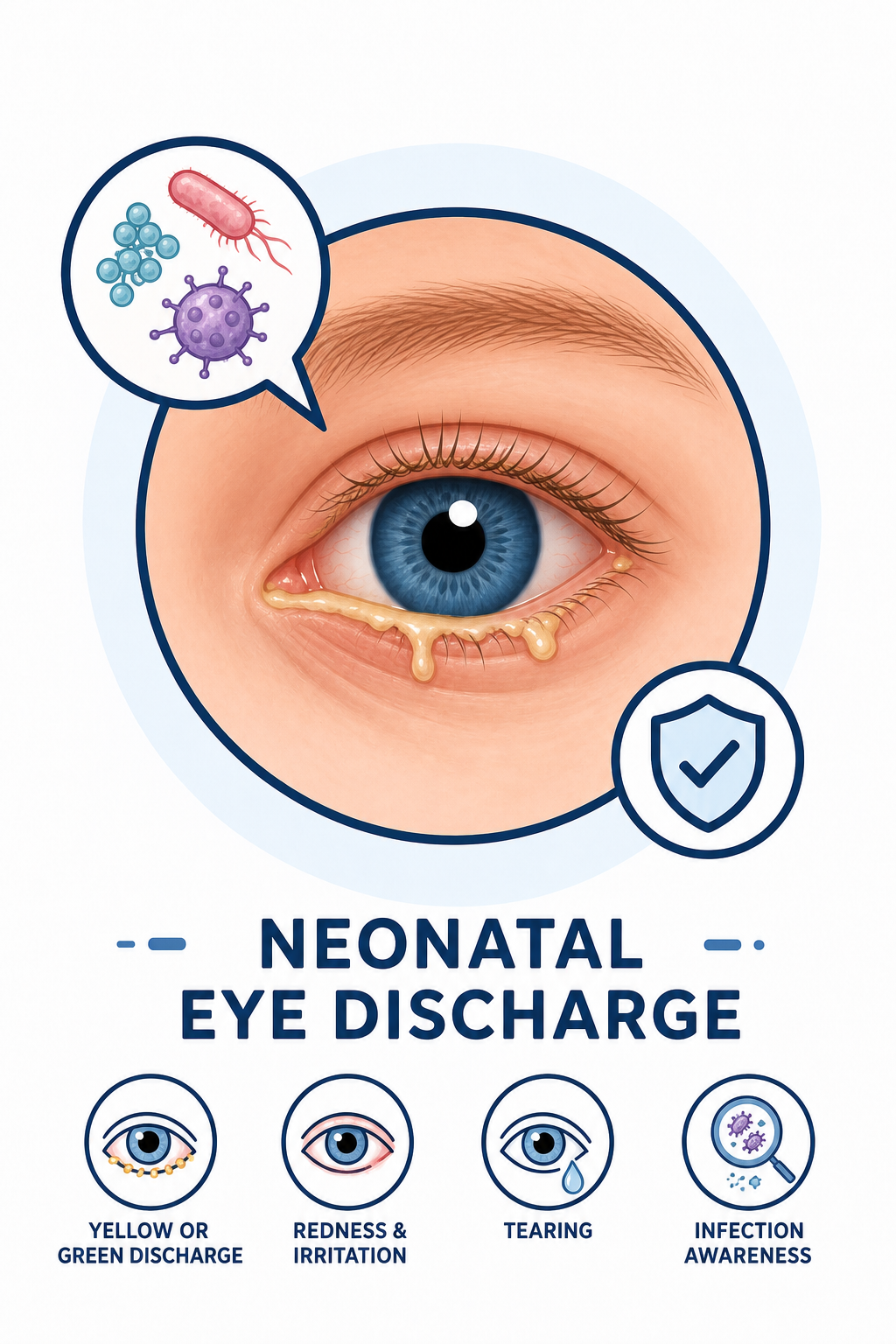
Neonatal eye discharge
Neonatal eye discharge may occur when tears and normal eye secretions cannot drain properly, or when inflammation affects the eye’s surface and eyelids.
- Blocked Tear Drainage: Newborns may have an incompletely opened tear duct, causing tears and sticky discharge to collect.
- Inflammation: Irritation or infection can inflame the conjunctiva, the thin membrane covering the white part of the eye and the inner eyelids.
- Infection: Bacteria or viruses may cause conjunctivitis in newborns, sometimes acquired during delivery or through contact after birth.
Primary Causes
The condition commonly results from one of the following:
- Blocked Tear Duct (Nasolacrimal Duct Obstruction): Tears cannot drain normally into the nose, leading to watery eyes and a yellow or sticky discharge. The white of the eye is often not severely red.
- Neonatal Conjunctivitis: An infection or irritation of the conjunctiva that may cause redness, swelling of the eyelids, and discharge. It can be bacterial, viral, or related to chemical irritation.
- Irritation or Environmental Exposure: Smoke, dust, or other irritants may occasionally cause temporary watering and mild discharge.
Common Symptoms
Symptoms can affect one or both eyes and may include:
- Watery or excessively teary eyes
- Yellow, green, white, or sticky discharge
- Crusting of the eyelashes, especially after sleep
- Redness of the white part of the eye
- Swollen or puffy eyelids
- Difficulty opening the eye because of crusting
Newborn eye discharge should be assessed promptly if there is significant redness, eyelid swelling, thick pus-like discharge, fever, poor feeding, or if the baby appears unwell.
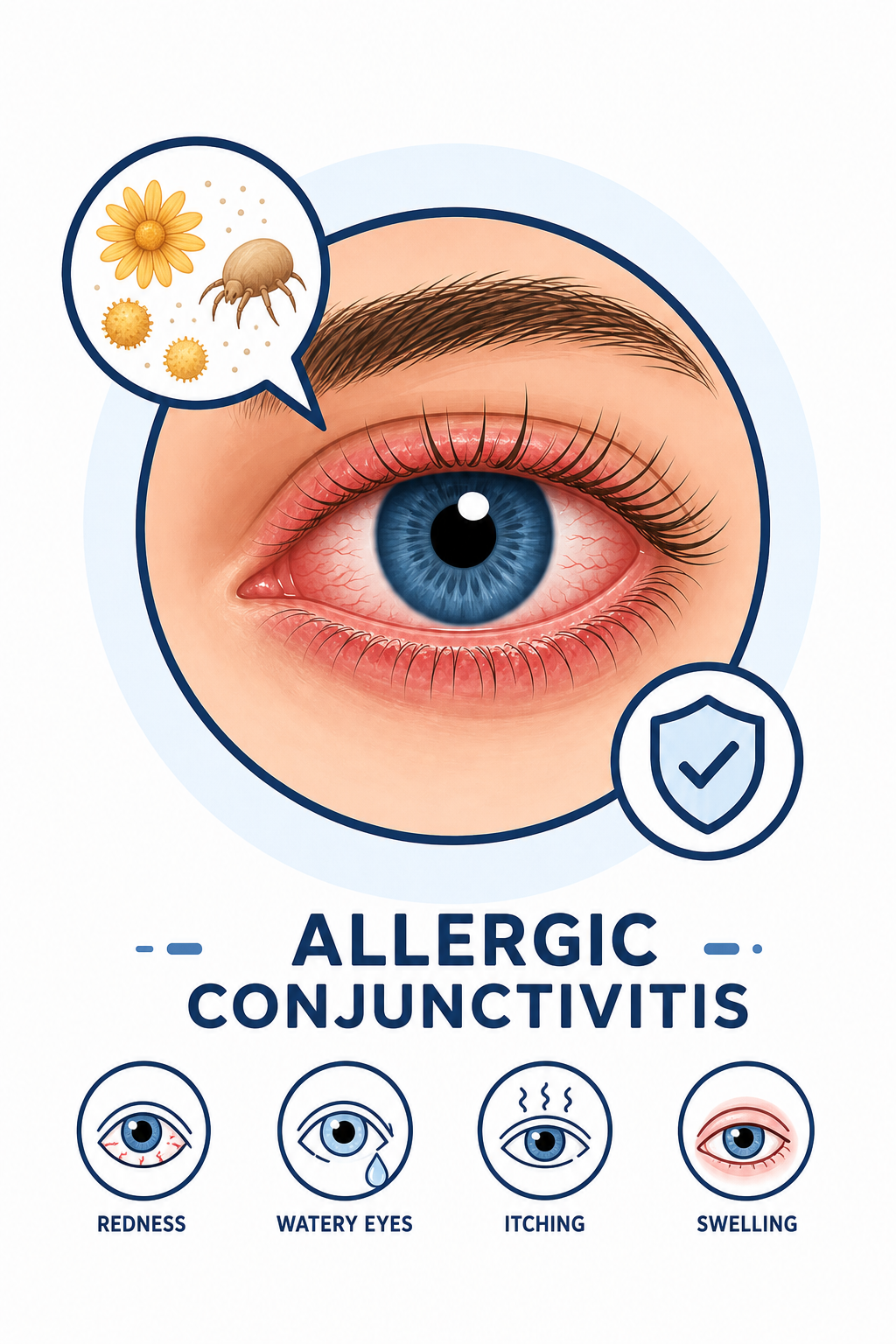
Allergic conjunctivitis
Allergic conjunctivitis is an inflammatory condition of the conjunctiva—the clear membrane covering the white part of the eye and the inside of the eyelids. It occurs when the immune system overreacts to harmless substances, such as pollen, dust mites, pet dander, or mold. This reaction causes itching, redness, tearing, and irritation, often affecting both eyes.
Key Characteristics & Mechanisms
Allergic conjunctivitis develops when allergens come into contact with the eye and trigger an immune response.
- Allergen Exposure: Substances such as pollen, dust, animal dander, or mold enter the eye and activate the body’s allergy response.
- Histamine Release: Mast cells in the conjunctiva release histamine and other inflammatory chemicals, producing itching, redness, and swelling.
- Inflammation: The conjunctiva and eyelids may become irritated and swollen, leading to discomfort and excess tearing.
Primary Causes
The condition is usually caused by exposure to allergens, including:
- Seasonal Allergens: Tree, grass, and weed pollen commonly cause symptoms during certain times of the year.
- Indoor Allergens: Dust mites, pet dander, mold, and household particles may trigger symptoms throughout the year.
- Associated Allergic Conditions: People with hay fever, asthma, or eczema may be more likely to develop allergic conjunctivitis.
Common Symptoms
Symptoms usually occur in both eyes and may include:
- Intense itching or a burning sensation
- Red, watery, or irritated eyes
- Swollen eyelids or puffiness around the eyes
- Clear, stringy, or watery eye discharge
- Sensitivity to light
- A gritty or foreign-body sensation in the eyes
- Sneezing, runny nose, or nasal congestion alongside eye symptoms